


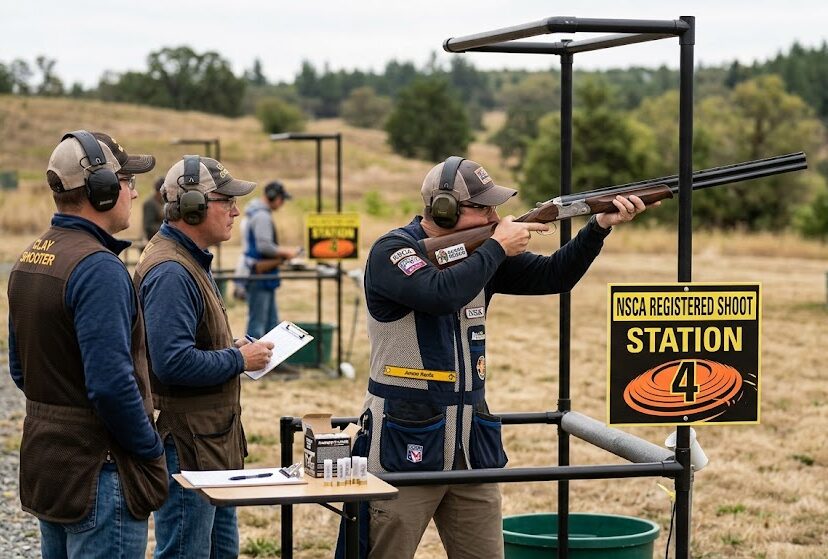
What is the National Sporting Clays Association (NSCA)?
Sporting clays is the ultimate test of a shooter’s visual acuity, mechanical consistency, and mental discipline. At the heart of this rapidly growing sport in the United States sits the National Sporting Clays Association (NSCA), the official governing body dedicated to promoting, preserving, and developing the game. Founded in 1989, the NSCA provides a standardized framework that transforms casual weekend shooting into a structured, competitive sport in which shooters can test their mettle on local, regional, and national stages.
Joining the NSCA offers enthusiasts far more than just a membership card; it unlocks access to thousands of registered tournaments annually, ensuring every broken clay counts toward an official record. Whether your goal is to win a local charity event or stand on the podium at the National Championship in San Antonio, the association provides a clear, data-driven pathway to track your progress. By establishing a unified rulebook and rigorous safety standards, the NSCA ensures a level playing field across every member club from coast to coast.
How to Participate in Your First Registered Shoot
Transitioning from recreational shooting to official NSCA competition is surprisingly straightforward, beginning with finding a registered event in your region. Most competitive events are managed through online tournament platforms like Score Chaser or WinScore, where you can easily view upcoming schedules, register for specific rotations, and see who else is squadded with you. New members can sign up online or even register on-site at a host club on the morning of an event, instantly receiving an official member number and starter classification.
On the morning of your first shoot, you will typically start in C Class—the baseline division for incoming competitors—and be squadded with a small group of fellow shooters. The atmosphere at a registered shoot is famously supportive, with seasoned competitors always willing to guide a newcomer through station etiquette, viewing target presentations, and menu protocols. All you need to bring to the course is a safe, functional shotgun, proper eye and ear protection, and enough target loads to clear a 100-target course.
Navigating the NSCA Punch System
The defining engine behind competitive progression in the NSCA is the punch system, a merit-based currency used to track shooter advancement through various skill classes. Instead of relying on subjective evaluations or arbitrary ranking systems, the association awards “punches” to shooters who finish at or near the top of their respective class in a registered event. This system serves as a transparent mechanism to ensure that actual performance under pressure, rather than the sheer volume of shooting, dictates a competitor’s ranking.
The number of punches awarded at any given tournament depends entirely on the size of your specific class and your final score relative to those of your peers. For example, winning a small class that has only a few shooters might net you a single punch, whereas dominating a massive class at a state or regional championship could yield up to four or five punches. The NSCA maintains a strict, publicly accessible punch matrix that scales dynamically based on entrant volume, ensuring that earning a punch in a highly competitive field carries significant weight.
Moving Up in Class: The Competitive Ladder
There are six(6) classes a shooter can classify into: Master-AA-A-B-C-D. Every competitive shooter begins the journey in “C” class unless they have shot registered targets through another governing organization. To ascend to the next rung on the ladder, a shooter must accumulate a designated number of punches within a calendar year or carry them over based on specific multi-year window rules. For instance, moving from C to B requires only 6 punches, while breaking out of the hyper-competitive AA class into Master Class demands a grueling 25 punches, forcing shooters to constantly refine their technique.
To keep the competition fair and prevent shooters from getting permanently stuck in a division where they are no longer competitive, the NSCA implements an annual end-of-year review. If a shooter fails to earn a punch or maintain a minimum target average within their class over a specified volume of targets, the system may automatically down-class them. This dynamic re-classification preserves the competitive integrity of each tier, ensuring that everyone has a legitimate, fighting chance to stand on the podium on any given weekend.
Managing Expectations and the Mental Game
One of the most common pitfalls for developing shooters is falling into the trap of “punch chasing,” where the focus shifts from breaking the current target to obsessing over class advancement. When you step into the shooting box thinking about the leaderboard rather than your pre-shot routine and visual focal point, your mechanical execution invariably suffers. The most successful competitors treat punches as a natural byproduct of excellent execution, rather than the primary goal of their shooting weekend.
Growth in sporting clays is rarely linear, meaning every shooter will inevitably experience ups and downs and will inevitably encounter frustrating plateaus where scores seem to stagnate despite heavy practice. Moving up a class often exposes flaws in a shooter’s fundamental mechanics or mental discipline that were easily masked against softer target presentations in lower classes. Recognizing these plateaus as necessary phases for skill consolidation—rather than a failure of talent—is crucial for maintaining long-term motivation and enjoyment.
True mastery of the sport requires balancing practice, coaching and mental training. The pressure tends to build as one climbs up in class. Embracing the community aspect of the NSCA can drastically alleviate this pressure, as squadding with superior shooters provides a front-row seat to excellent target reading and emotional control. The camaraderie between stations and meeting friends at the event is ultimately what sustains a shooter through the inevitable slumps that define the competitive journey.
Conclusion: Your Journey to the Podium
Ultimately, the National Sporting Clays Association provides the perfect arena to challenge yourself, refine your marksmanship, and join a passionate community of outdoor enthusiasts. Navigating the punch system and climbing the classes is a marathon, not a sprint, demanding patience, resilience, and a willingness to learn from every lost target. Grab your gear, sign up for a local registered shoot, and remember that every champion in Master Class started exactly where you are standing today.
Need an economical load for practice or your next competition with free shipping?
Try Clever. 12G Clever Club Load 12 Gauge #7.5 1oz 1250fps (500 Rounds) CCL12SC175 No Coupons allowed * Ships Free
0 Comments